Welcome to
CISAT 2019
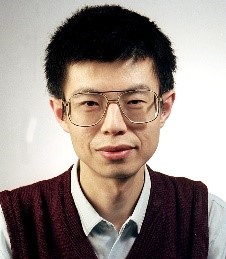 | Prof. Qingsheng Zeng Nanjing University of Aeronautics and Astronautics, China Speech Title: to be added... Speech Abstract: to be added... |
| A.Prof. Jiwa Abdullah Universiti Tun Hussein Onn Malaysia Speech Title: Real-time Data Collection Optimization For Multivariate Sensor Nodes in Iot Environment Speech Abstract: In the WSN applications, nodes depend on a small battery with short lifetime. The battery losses power during data collection mechanisms, due to the increasing number of transmissions packets, the wastage of the battery energy in transmitting incorrect data and the increasing in number bits of the payload data. The WSN sensor board with multivariate sensors posses additional challenges for the battery lifetime by the additional data transmissions, thus draining the battery more. We proposed an efficient real-time data collection optimization for WSN with multivariate sensors. It is a form of general structure with two main levels; WSN sensor board level and fusion center level. The WSN sensor board level is implemented in real-time by all IoT sensor boards simultaneously in each cycle and fusion center level is executed by the fusion center. WSN sensor board level includes various stages as the follows; check the physical conditions of the WSN edge device (board) stage, update data strategy stage, data validation stage and sensed data reduction stage. The average of the total percentage of energy saved by the algorithm to real-time data sets injected with various percentages of errors for all nodes is very significant. In summary, the data collection models have a very high performance in terms of energy consumption. |
| Prof. Badrul Hisham bin Ahmad Universiti Teknikal Malaysia Melaka / Faculty of Electronics and Computer Speech Title: Design and Development of VHF FRONT-END for lightning interferometer system |
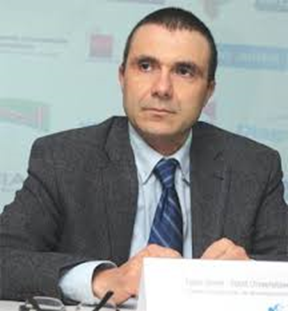 | Prof. Hicham Medromi Director of the National Higher School of Electricity and Mechanics, Morocco Speech Title: Innovation for industry 4.0 Speech Abstract: The industry underwent several revolutions, the first of which was coal mining with the development of the steam engine. The introduction of electricity and mechanics led to a second revolution. While the emergence of electronics and information technology marked the third industrial revolution, driven by the emergence of new technologies, the fourth industrial revolution corresponds to a new way of organizing the means of production. This new industry is attesting to itself as the convergence of the virtual world, digital design, management with real-world products and objects. |
| Prof. Sabira Khatun University Malaysia Pahang, Malaysia Speech Title: Computer Aided Disease Diagnosis Systems using UWB and AI: Opportunities and Challenges Speech Abstract: The medical practitioners face many challenges using traditional diagnosing process, such as, X-ray, MRI, CT Scans, Ultrasound, and IVUS in diagnosing respective diseases. Some of the diseases are difficult to diagnose at early and/or any stage due to its similarity in sign and symptoms, such as, Lung disease, early cancer/tumor screening, brain problems, early diabetes, etc. The solution is to use computer sided diagnosis systems to aid the medical practitioner in their diagnosis process. Artificial Intelligence (AI) with Deep Learning (DL) techniques are the current state-of-art in disease signature detection, recognition, monitoring and classification problems, where it can be the algorithm in the computer aided diagnosis. Ultra Wideband (UWB) is an attractive candidate for the use of noninvasive bio-medical screening/applications due to its features including: a wide (3.1-10.6GHz) bandwidth, use of very low power, can penetrate through any medium, bio-health friendly (including human). There is widespread use of signal processing in medical field. Some of the motivations for this is due to the need of processing large amounts of medical data generated during medical examinations, and the variability in quality and expert opinions. Some challenges of (UWB) signal, and image processing along with AI in the medical field need proper investigation. Due to use of UWB high frequency, we have investigated and found some solutions on: how to handle the Nano pulses of UWB signals for bio-medical application (with lossy/dispersive medium), necessity of underneath technology extension, mitigation of interference from other health-devices, etc. Combining UWB and AI, two of our example implementation strategies with promising results are: (i) Early breast tumor/cancer diagnosis/screening at home to mitigate the major issues for women death worldwide, and (ii) Non-invasive Blood Glucose Level Measurement and Monitoring (BGLM2) to reduce the health consequences. Further investigation is needed on the possibility of non-invasive/non-destructive computer aided techniques, their implementation challenges and opportunities in bio-health including plant, food/grain, and personal digital health assistant (PDHA) system with predictive analytics for human. |
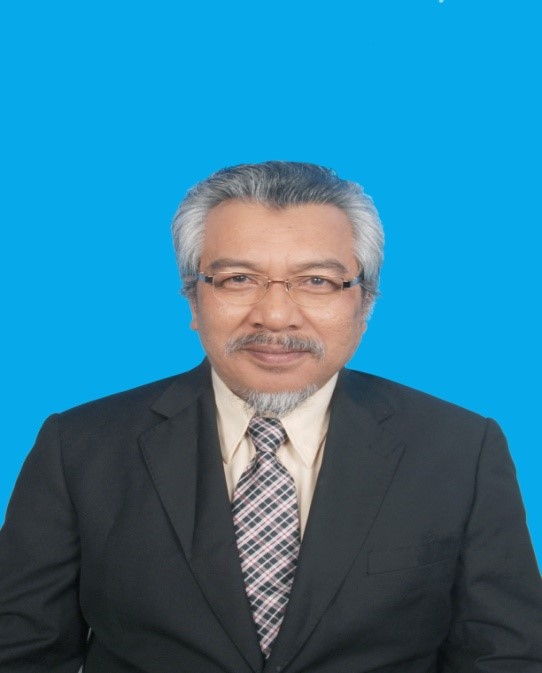
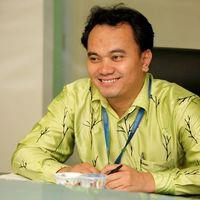
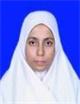
-
Contact Us
Dr.Xu / Max Xu | 徐老师
-----------------------------------------------
 ICCISAT@126.com
-----------------------------------------------
 +86-18702044440
-----------------------------------------------
 +86-020-29035993
-----------------------------------------------
 1571351296
-----------------------------------------------
 18702044440
-----------------------------------------------
 729672148(QQ Group)
-----------------------------------------------
Dr. Xu's Wechat